
14 rounds · filed under dense · 8 of them
Crochet Panels · added 12 Oct 2026
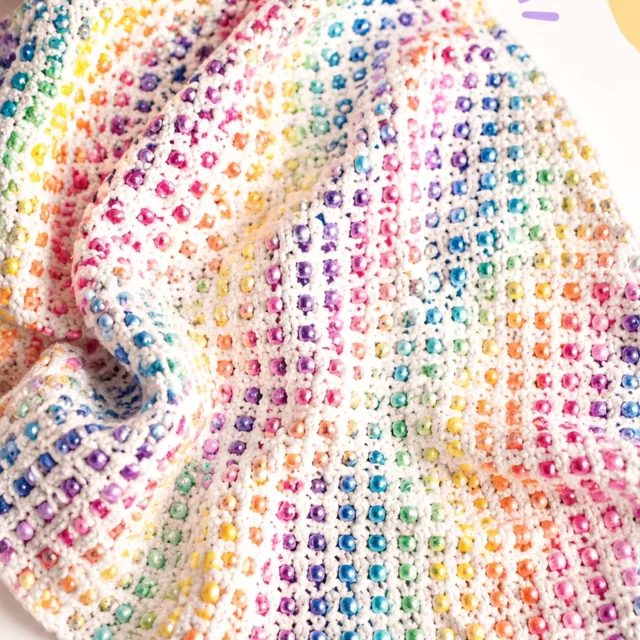
Beaded single crochet panel with an open grid texture
Beaded single crochet sits in a firm cotton grid, making a dotted panel for bags, pillows, or wall hangings.
- Skill
- Confident Beginner to Intermediate
- Time
- 4-6 hours
- Hook
- 3.5 mm
- Yarn
- DK
- Rounds
- 10
About this pattern
Under the hand this fabric reads firm and a little textured, the result of a small 3.5 mm hook keeping cotton stitches tight even with beads hanging between them. Solid single crochet rows build the dense base, while one row of double crochet with chain-1 spaces opens the grid just enough to let the beads sit flush against the surface instead of poking forward. The cotton keeps every stitch crisp, so the dots read as a clean mosaic rather than a blur.
The piece grows as a flat rectangle, worked back and forth in rows with no shaping, which is why it lies ready to become a pouch front, a clutch panel, a pillow accent, or a small wall hanging. Once the rows are done, block it between towels to square the edges before deciding on a backing or trim, since the bead weight can pull the fabric slightly out of true until it is set.
The swatch in numbers
- Rounds
- 10
- Parts
- 3
- Level
- Confident Beginner to Intermediate
- Time
- 4-6 hours
- Hook
- 3.5 mm
- Yarn
- DK
The yarn and the hook
- DK weight cotton yarn in white or cream as the main color, approximately 250 yards (229 meters)
- Approximately 150 to 200 small smooth crochet beads in assorted colors
- 3.5 mm (US E/4) crochet hook
- Yarn needle
- Scissors
- Stitch markers
Stitches, spelled out
ch chain; sc single crochetDense; dc double crochetDrape; sl st slip stitch; st stitch; sp space; rep repeat; UK equivalent note US single crochet is called double crochet in UK terminology. US double crochet is called treble crochet in UK terminology..
Tension and hand-feel
Gauge: 22 single crochet stitches by 24 rows measures 4 inches (10 cm). Finished Size: the blocked panel measures approximately 10 x 12 inches (25 x 30 cm).
After row 1, count across the foundation sc row and confirm it holds at 55 stitches without the edges pulling narrower than that count.
If the stitch count drifts, swap to a hook a half size up or down before row 3, since the open dc grid will show any looseness or tightness more than the solid sc rows do.
Main Pattern
Special Bead Technique
Beaded single crochet: Slide one bead close to the hook before completing a single crochet stitch. The bead will sit on the front side of the fabric. Place beads only on designated rows to maintain an even pattern.
Preparation
String approximately 150 beads onto the working yarn before beginning. Arrange colors randomly or create your own repeating color sequence. Keep beads loose enough to slide smoothly while crocheting.
How the texture is built
- Row 3 breaks the solid sc fabric into 28 dc separated by 27 chain-1 spaces, opening the grid before the bead rows begin.
- Row 4 closes that open grid back into 55 solid sc, giving the beaded rows a firm, even base to sit on rather than loose chain spaces.
- Bead placement in row 5 falls on a 6-stitch repeat (5 sc, then 1 beaded sc), spacing the dots evenly rather than clustering them, and the whole piece is worked flat with no join, which is what keeps the edges straight for blocking.
Putting the pieces together
Colorways
- Metallic Beads Use metallic beads for an elegant evening accessory.
- Pastel Beads Choose pastel beads for soft home décor pieces.
- Themed Color Arrangements Create themed color arrangements for gifts and seasonal projects.
- Larger Beads with Thicker Yarn Use larger beads with thicker yarn for a bolder texture.
Washing and blocking
Hand wash in cool water with mild soap, as cotton holds its shape better without machine agitation pulling at the bead-anchored stitches.
Lay the panel flat to dry rather than hanging it, since wet cotton can stretch under the combined weight of 150 to 200 beads.
Reshape by blocking between towels and store the finished piece flat, not folded, to avoid permanent crease lines running through the beaded rows.
When it does not look right
- the fabric feels too tight to work comfortably
- Beaded crochet requires consistent tension because beads can make the fabric heavier. If the stitches become too tight, move up a hook size slightly to maintain flexibility.
- bead rows look uneven
- Count stitches before adding beads and follow the placement sequence carefully.
- edges curl instead of lying flat
- Check your gauge and add the recommended border.
- beads feel loose in the fabric
- Make sure each bead is trapped securely inside a completed stitch.
- Pro Tip
- Keep your bead colors mixed in small groups rather than random handfuls. This creates a balanced handmade look while still preserving the playful mosaic effect.
Questions people ask
Can you make this panel wider or longer?
Yes. Add foundation chains in multiples of 2 plus 1 to change the width, and repeat the textured rows further to add length. Both adjustments keep the 6-stitch bead repeat and the row 3 grid working correctly.
How many beads should you have on hand?
Plan for roughly 150 to 200 small smooth beads, strung onto the yarn before starting since beads can't be added mid-row once crochet begins.
Do beads go on every row of the panel?
No. Beads are placed only on the designated rows, such as row 5, while rows like 1, 2, 3, and 4 stay bead-free to keep the dotted pattern even rather than crowded.
What hook size keeps the fabric firm enough to hold the beads?
A 3.5 mm (US E/4) hook paired with DK weight cotton produces a fabric tight enough to support the added bead weight without sagging or gapping.
New patterns, as they are filed
One short email when a batch lands, with the feel of each.