
13 rounds · filed under ridge · 2 of them
Sweaters · added 29 Sep 2026
Bouclé double crochet sweater pattern for cozy layers
Double crochet in bouclé yarn builds a dense, nubby panel that shapes into a cozy sweater with optional ribbed cuffs.
- Skill
- Intermediate
- Time
- 3-5 hours
- Hook
- 7 mm
- Yarn
- Bulky
- Rounds
- 8
About this pattern
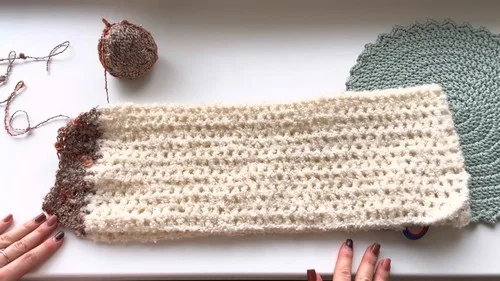
Double crochet worked into bouclé yarn turns out a dense, slightly nubby fabric — the yarn's own loops sit on the surface while the stitch itself locks everything into a solid, opaque cloth that doesn't show much stitch definition. Worked at a 7 mm hook, the fabric stays soft rather than stiff, with enough weight to hang straight instead of curling. The rows worked into the spaces between stitches add a faint ridge, so the surface reads as slightly ribbed under the hand even though every row is a plain double crochet row.
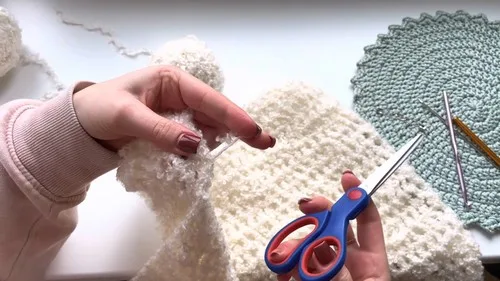
The sweater is worked in separate panels for the body and sleeves, making it easy to adjust sizing, sleeve length, and overall fit. The piece builds as a flat rectangular panel, chained to shoulder width and worked in double crochet rows until it reaches the length you want — the same flat piece that becomes a sweater body or sleeve depending on how it's folded and seamed. Add the optional ribbed cuff to one short edge of a sleeve panel for a tapered wrist finish. Once the panels are the right length, weave in the ends and move on to assembly, joining panels along the edges to shape the finished sweater.
The swatch in numbers
- Rounds
- 8
- Parts
- 3
- Level
- Intermediate
- Time
- 3-5 hours
- Hook
- 7 mm
- Yarn
- Bulky
The yarn and the hook
- Bouclé yarn or any yarn of choice
- 7 mm crochet hook or size needed
- Scissors
- Tapestry needle
Stitches, spelled out
ch chain; st stitch; sc single crochetDense; dc double crochetDrape; dec decrease.
Tension and hand-feel
After chaining and working the first row of double crochet, lay the panel flat and measure its width against your shoulder measurement — the medium size example uses 43 chains for 40 double crochets to reach the right span.
If the row comes up narrower or wider than your shoulder measurement, unravel and adjust the starting chain count up or down before working further rows.
Main Body Piece (Make 2)
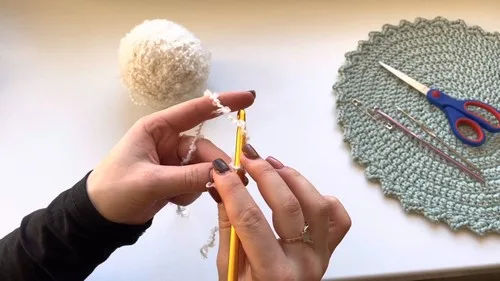
Make 2Foundation Make a slip knot and chain a length that matches your shoulder width. Example size medium uses 43 chains for 40 double crochets.
Sleeves (Make 2)
Make 2Sleeve Foundation Make a slip knot and chain a length that matches your desired sleeve length.
Sleeve Rows Work rows of double crochet the same way as the body panels. Continue until the sleeve panel reaches your desired width.
Optional Sleeve Cuff
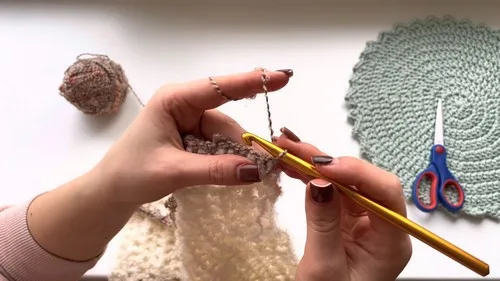
Attach yarn on the short edge of the sleeve
How the texture is built
- The foundation chain is sized directly to shoulder width — 43 chains worked into 40 double crochets for a medium — so the panel's width is fixed before a single row of pattern is worked, rather than shaped later with increases or decreases.
- Two double crochets are placed into the last stitch of every row, adding a steady edge increase along one side of the panel as it grows in length.
- The optional sleeve cuff decreases at shrinking intervals — every sixth stitch, then every fifth, then every third — across its six rows, tapering the fabric gradually rather than in one abrupt decrease row, which pulls the cuff in toward the wrist without puckering.
Putting the pieces together
If you swap the yarn
| Bulky-weight wool, single-ply | Drapes heavier and holds more warmth than bouclé, with a smoother surface that shows the double crochet stitch pattern instead of hiding it under loops; keep the 7 mm hook. |
|---|---|
| Worsted-weight cotton-acrylic blend, held double | Produces a lighter, more breathable panel with visible stitch texture and a flatter drape than bouclé; may need to size down to a 6 mm hook to keep the fabric from getting loose. |
| Mohair-blend lace weight, held together | Keeps a soft halo similar to bouclé's texture without the loops, adds loft without much extra weight, and works fine on the same 7 mm hook. |
Washing and blocking
Hand wash bouclé pieces in cool water and avoid twisting or wringing, since the twisted loops of the yarn can snag or flatten under rough handling.
Dry the panel flat on a towel rather than hanging it, since a wet double crochet panel this dense holds water and can stretch out of shape under its own weight.
Store the finished sweater folded rather than on a hanger, keeping the loopy surface of the bouclé from getting pulled or crushed against a hanger's shoulders.
When it does not look right
- The edge of the panel ruffles instead of lying flat
- The two double crochets worked into the last stitch of every row add extra fabric along that edge faster than the rest of the row grows; work a single double crochet into the last stitch every other row instead to slow the increase.
- The sleeve cuff tapers in uneven jumps
- The decrease intervals shift from every sixth stitch to every fifth to every third across the six rows, and skipping or misplacing even one decrease throws off the spacing; mark each decrease stitch with a stitch marker before working it.
- The panel comes out narrower or wider
- The foundation chain sets the entire width before any rows are worked, so a mismatched chain count carries through the whole panel; measure the chain itself against your shoulder before starting the first row of double crochet.
Close-ups
Questions people ask
Can the panel be sized for a different shoulder width than the sample?
Yes, the chain length sets the shoulder width directly, and the medium sample uses 43 chains for 40 double crochets. Add or remove chains in the same ratio to widen or narrow the panel for your own measurement.
Is the sleeve cuff required to finish the sweater?
No, it's listed as optional. Skip it for a straight sleeve edge, or work its six rows for a tapered, ribbed finish at the wrist.
Why does the main panel call for double crochet into spaces rather than into the stitches themselves?
Working into the space between stitches rather than the stitch top keeps the fabric a bit looser and gives it a faint ridged texture instead of a flat, uniform surface.
What if bouclé yarn isn't available?
The materials list allows any yarn of choice, so a substitute yarn works as long as the hook size is adjusted to match its weight and the fabric width is checked against the shoulder measurement.
New patterns, as they are filed
One short email when a batch lands, with the feel of each.