
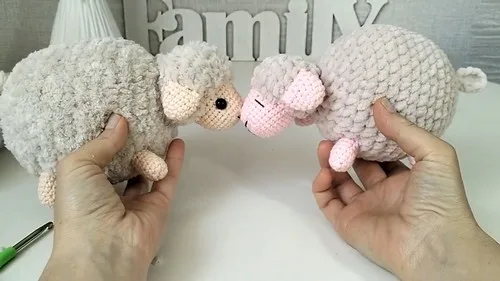
28 rounds · filed under dense · 22 of them
Amigurumi · added 15 Sep 2026
Crochet plush sheep pattern with a woolly ridged body
Single crochet builds a dense, huggable body with a bobbled muzzle texture on this stuffed sheep toy for kids.
- Skill
- Intermediate
- Time
- 4-6 hours
- Hook
- 2.5 mm
- Yarn
- Worsted
- Rounds
- 28
About this pattern
Worked entirely in single crochet, the body comes out dense and closed, with no gaps for stuffing to peek through. Each round packs stitches tight against the last, so the fabric holds its shape on its own before a single bit of fiberfill goes in. Run a finger across the torso and you feel firm little ridges rather than smooth rows, the texture that makes this toy read as woolly instead of slick.
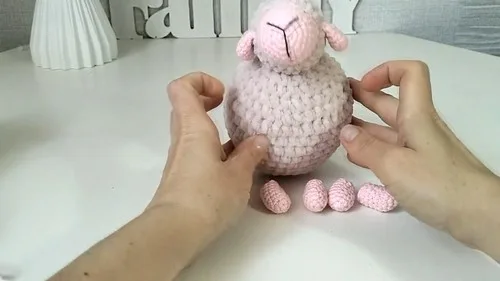
The torso builds up from a magic ring into a rounded, barrel-like form over 19 rounds, wide enough to seat four short legs and take a stuffed head at the top. Two ears and a tail finish the silhouette. Once stuffed, the piece sits upright on its own, a shape sized for a child's hands to grip and carry around.
The swatch in numbers
- Rounds
- 28
- Parts
- 5
- Level
- Intermediate
- Time
- 4-6 hours
- Hook
- 2.5 mm
- Yarn
- Worsted
The yarn and the hook
- Yarn in two colors (main body and accent for ears/muzzle)
- 2.5 mm crochet hook for details
- 4.5 mm or 4 mm crochet hook for head/body
- Fiberfill stuffing
- Black thread for face embroidery
- Yarn needle
- Scissors
Stitches, spelled out
ch chain; sc single crochetDense; inc increase; dec decrease; mr magic ringDense.
Tension and hand-feel
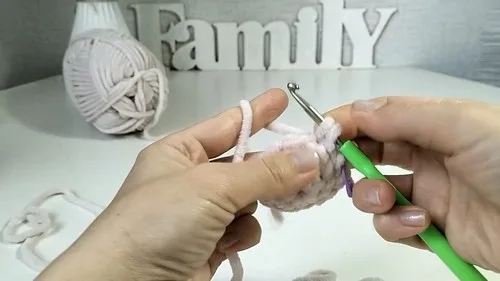
After round 2 of the body, lay the piece flat and count: it should hold exactly 12 single crochet stitches without the ring rounds puckering into a cone or splaying open into a saucer.
If the circle sits too loose or the stitches gap, drop down half a hook size and redo the first two rounds before continuing, since a floppy start round will show through the fiberfill later.
Body (Torso)
Create a magic ring, ch 2, then:
Muzzle and Head
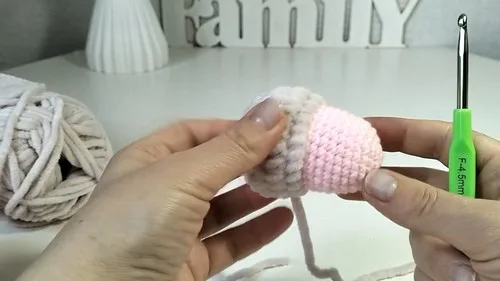
Begin with muzzle color and 2.5 mm hook:
Embroider eyes and nose with black thread.
Ears (Make 2)
Use YarnArt Jeans and 2.5 mm hook:
Legs (Make 4)
Tail
With main body color yarn: Ch 9, cut yarn and pull through.
Leave both yarn tails long.
Attach to back of body and secure inside by knotting the tails.
How the texture is built
- The body's increase rounds run from round 1 (6 stitches) through round 6 (36 stitches), after which rounds 7–14 work eight straight rounds of single crochet before rounds 15–19 decrease back down to close the base.
- The ears are worked flat for their last four rounds by folding the 12-stitch circle in half and single crocheting across both layers to 6 stitches, which seals the ear into a flat, doubled tab instead of leaving it as an open cup.
- Legs follow the same two-step shaping as the ears, an increase round from 5 to 10 stitches, then straight single crochet for the remaining rounds, giving four short stuffed tubes sized to attach directly to the torso without further shaping.
If you swap the yarn
| Acrylic worsted weight | Keeps the finished sheep close to the original size and produces the same firm, slightly springy single crochet fabric; use the same 4.5 mm or 4 mm hook for the body and 2.5 mm for ears and muzzle. |
|---|---|
| Cotton DK weight | Drops stitch definition and drape noticeably flatter, so size down to a hook in the 3.5 mm to 4 mm range for the body to keep the fabric dense enough to hold stuffing without gaps. |
| Wool-blend bulky weight | Produces a noticeably larger, plusher sheep with looser stitch texture; size up to a 5 mm or 5.5 mm hook for the body and use less fiberfill, since the thicker yarn itself adds bulk. |
Colorways
- Classic contrast fleece Main color covers the torso and all four legs; the accent color is reserved for the muzzle rounds at the start of the head, both ears, and the tail.
Washing and blocking
Hand wash in cool water and avoid wringing, since twisting a stuffed single crochet piece can distort the tight rounds around the body.
Lay flat to dry rather than hanging, so the weight of the wet fiberfill does not stretch the torso out of its rounded shape.
Reshape the ears and legs by hand while still damp, smoothing the folded seam on each ear flat, then store the finished sheep away from direct sunlight to keep both colors from fading unevenly.
When it does not look right
- The torso starts to cone instead of lying flat at the base.
- One of the early increase rounds was skipped or worked short; check that round 1 has 6 stitches, round 2 has 12, and round 3 has 18 before continuing upward.
- The ears look like open cups instead of flat tabs.
- The fold-and-join step for rounds 3 to 6 was missed; fold the 12-stitch circle in half and single crochet through both layers to bring the stitch count down to 6 and flatten the ear.
- The legs wobble or twist where they meet the body.
- Light, even stuffing is key before attaching; understuffed legs fold at the seam, so fill each leg firmly enough to hold its tube shape before sewing it to the torso.
Close-ups
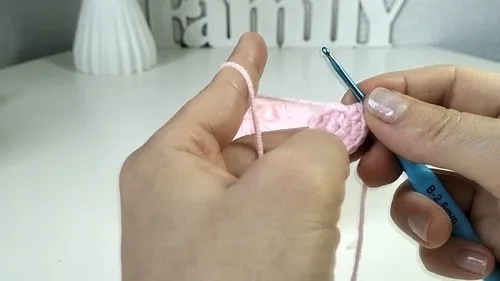
Questions people ask
Why does the pattern call for two different hook sizes?
The 2.5 mm hook works the muzzle, ears, and finer details, keeping those small pieces tight and closed so stuffing does not show through. The larger 4.5 mm or 4 mm hook works the torso, producing a looser, faster fabric suited to a bigger piece that still holds its shape once stuffed.
How much yarn does this sheep actually use?
The materials list calls for two colors without specifying yardage, since usage depends on final size and stuffing density. Keep a small amount of the accent color on hand for the ears, muzzle rounds, and tail, and expect the main color to cover the bulk of the torso and legs.
Can the legs and ears be swapped between the two colors listed?
Yes, since both pieces are worked separately from the torso and sewn on afterward. Working the legs in the accent color and the ears in the main color changes the look entirely without touching the construction.
Is this sheep pattern suitable for a first amigurumi project?
It suits someone comfortable with single crochet, magic rings, and increases rather than a first-ever project, since the ears require folding and joining two layers together. The legs and torso otherwise use straightforward, repeated shaping.
New patterns, as they are filed
One short email when a batch lands, with the feel of each.