
6 rounds · filed under drape · 2 of them
Granny squares · added 6 Oct 2026
Large granny square in double crochet stitch
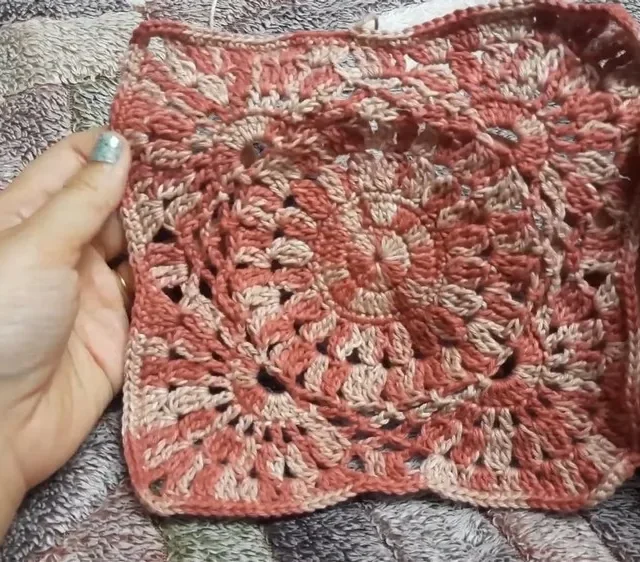
Double crochet builds a firm, ridged square under the hand. A four-round granny square worked solid from a ring.
- Skill
- Intermediate
- Time
- 4-6 hours
- Hook
- 3 mm
- Yarn
- Worsted
- Rounds
- 6
About this pattern
Under the hand this square sits firm and slightly ridged, the result of working double crochet stitch after double crochet stitch into a tight ring. Cotton yarn holds that structure without softening it the way wool would, so the fabric feels crisp and a little stiff fresh off the hook, with a texture you can read by touch alone, each stitch a distinct raised bar.
The shape builds outward from a center ring into a square block, flat and stable once the 20 double crochets of round 2 settle into place. On its own it works as a coaster or a hot-pad base; multiplied and joined edge to edge, it becomes a throw, a bag panel, or a cushion front, the firmness of the cotton giving the finished piece enough body to hold its shape without a lining.
The swatch in numbers
- Rounds
- 6
- Level
- Intermediate
- Time
- 4-6 hours
- Hook
- 3 mm
- Yarn
- Worsted
The yarn and the hook
- 100% cotton yarn
- 3 mm crochet hook
Stitches, spelled out
ch chain; st stitch; sl st slip stitch; sc single crochetDense; dc double crochetDrape; tr treble crochetDrape; dtr double treble crochetDrape; cl cluster stitch.
Tension and hand-feel
After round 2, lay the ring flat and count the double crochets around the top edge; you should land on 20 stitches sitting evenly spaced with no gaps pulling open at the ring.
If the count is off or the ring puckers instead of lying flat, pull back to the chain-4 ring and re-check that each double crochet landed fully inside it before continuing to round 3.
Main Pattern
You should have a total of 20 double crochets.
You should have a total of 40 double crochets.
How the texture is built
- Round 2 places all 20 double crochets into the same center ring rather than spacing them into previous stitches, which is what keeps the opening ring small and tight at the core of the square.
- The piece is worked in continuous rounds rather than turned rows, so the right side always faces up and the ridge pattern from each double crochet stacks in one direction without a seam line.
- Each round closes with a slip stitch into the top of the starting chain-3, which squares off the turn and gives the next round a clean stitch to chain into rather than a sloped edge.
If you swap the yarn
| Mercerized cotton, worsted weight | Gives a square with a slight sheen and the same crisp hand as standard cotton; use the same 3 mm hook, and expect the finished block to hold its edges even more firmly. |
|---|---|
| Acrylic, worsted weight | Produces a square closer to the same size but with more give and a softer, slightly fuzzy surface; size the hook up a touch if the stitches feel tight. |
| Cotton-linen blend, DK weight | Makes a smaller, thinner square with a dry, papery drape; drop to a smaller hook so the double crochets stay snug rather than loose and open. |
Colorways
- Contrast border Keep rounds 1 through 3 in one solid color and change only for round 4, so the final round frames the square in a contrasting outline.
Washing and blocking
Hand wash or machine wash on a gentle cycle in cool water, since cotton holds color well but can shrink slightly in hot water.
Lay the square flat to dry rather than hanging it, which keeps the four sides from stretching unevenly under the weight of wet cotton.
Once dry, press lightly with a warm iron to flatten any cupping at the center ring, and store the square flat or folded rather than rolled to keep the corners square.
When it does not look right
- The center ring puckers or won't lie flat after round 2
- This usually means the 20 double crochets are crowded too tightly into the chain-4 ring; loosen the tension on the first few stitches of round 2 so the ring can open out under them.
- The square cups or domes instead of lying flat
- This points to stitches worked too tightly through the rounds, which pulls the fabric inward; work the double crochets with slightly looser tension, especially at the slip stitch joins.
- One corner looks looser or more open than the others
- This is usually a missed or doubled stitch at that corner's turn; count stitches along that side against the others and adjust before moving to the next round.
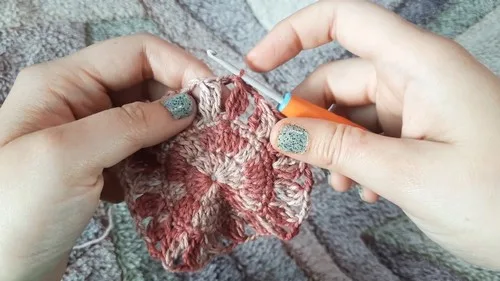
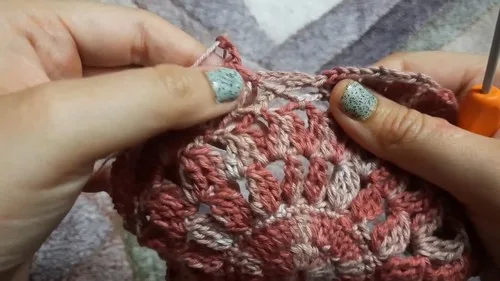
Close-ups
Questions people ask
Why does the square feel stiff right after finishing it?
Cotton yarn worked in dense double crochet produces a firm, slightly stiff fabric straight off the hook. A light wash and a flat press soften the hand somewhat without losing the structure.
Can this square be joined to others to make a larger piece?
Yes, the flat four-round block is built to sit edge to edge with identical squares. Join along the outer round-4 edge for a seamless grid.
Does the chain-3 at the start of each round count as a stitch?
Yes, each round's starting chain-3 stands in for the first double crochet of that round. The round then closes with a slip stitch into the top of that same chain.
Why use a 3 mm hook with worsted-weight cotton instead of a larger one?
The smaller hook keeps the double crochet stitches snug against the cotton fiber, which is what gives the finished square its firm, slightly structured hand. A larger hook would loosen the fabric and let it drape more than this pattern intends.
New patterns, as they are filed
One short email when a batch lands, with the feel of each.