
27 rounds · filed under dense · 25 of them
Amigurumi · added 26 Sep 2026
Single crochet teddy bear with built-in arm join
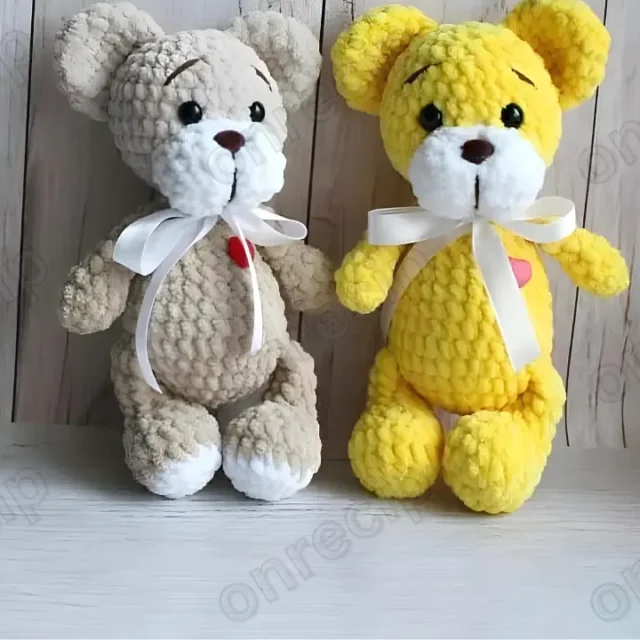
Single crochet builds a dense, low-stretch fabric for this one-piece amigurumi bear body and head.
- Skill
- Intermediate
- Time
- 4-6 hours
- Hook
- 3.5 mm
- Yarn
- Worsted
- Rounds
- 27
About this pattern
Under your hand this bear comes out dense and a little stiff, the closed knit of single crochet packing the stitches so tight that stuffing won't peek through. That tightness is what holds the shape once fiberfill goes in — the fabric resists stretching outward, so the body keeps its round profile instead of sagging. Worked with a soft baby yarn like Dolce or Dolphin, the surface still feels plush against the palm even though the stitch itself is firm and closed.
The body and head form one continuous piece, tapering from a wide round base up through the decreases into a narrower neck and skull. That single-piece shaping means no seam to sew between body and head — you just keep working the same tube and let the stitch counts pull it inward. Stuff as you go rather than waiting until the end, packing fiberfill into the lower rounds before the neck closes them off from easy reach.
The swatch in numbers
- Rounds
- 27
- Parts
- 3
- Level
- Intermediate
- Time
- 4-6 hours
- Hook
- 3.5 mm
- Yarn
- Worsted
The yarn and the hook
- YarnArt Dolce or Himalaya Dolphin Baby yarn
- 3.5 mm or 4.0 mm crochet hook
- 10 mm safety eyes
- Black or brown safety nose
- Black or brown embroidery floss or cotton yarn
- Tapestry needle and scissors
- Satin ribbon for a bow
- Fiberfill
Stitches, spelled out
R row; st stitch; sc single crochetDense; hdc half double crochetDense; inc increase (2 sc in one stitch); dec decrease (2 sc together); [...] number of stitches you should have at the end of the row; (...) repeat whatever is between the brackets the given number of times.
Tension and hand-feel
After round 9, lay the piece flat and check that the 30 single crochet stitches sit evenly around without the fabric flaring or cupping at the edge.
If the circle domes upward or won't lie flat, your tension is too tight for the hook size listed (3.5 mm or 4.0 mm) — move up a hook size and rework the round.
Arms (make 2)
Legs (make 2)
Body and Head
How the texture is built
- Rounds 7 through 9 hold steady at 30 stitches for three full rows, giving the body its widest, straightest section before any shaping begins.
- round 10 onward the decreases are spaced eight, then seven, then six stitches apart between each dec, pulling the count down by three stitches per round and curving the fabric inward toward the neck.
- Round 13 does double duty: while decreasing from 21 to 18 stitches, it also crochets the arm stitches directly into the body stitches, joining the limb to the torso in the same pass instead of sewing it on afterward.
If you swap the yarn
| acrylic worsted weight | produces a firmer, slightly springier fabric than the baby yarn called for, holds its shape well with less fiberfill, and works comfortably on the same 3.5-4.0 mm hook. |
|---|---|
| cotton DK weight | gives a crisper, less fuzzy surface with more visible stitch definition, drapes less than the plush baby yarn, and may need a slightly smaller hook to keep the fabric dense enough to hold stuffing. |
| chenille or velvet-style yarn | creates a noticeably softer, fuzzier surface that hides the stitch pattern, adds bulk that can make the piece look slightly larger at the same round counts, and pairs best with the larger 4.0 mm hook. |
Colorways
- Classic honey bear Work rounds 7-13 of the body and head in a warm tan or honey shade throughout, keeping the whole piece one solid color so the single crochet texture reads as smooth fur.
Washing and blocking
Hand wash the finished bear in cool water with a mild detergent, since the soft baby-yarn fibers can mat or felt under hot water and heavy agitation.
Reshape the body and head while damp, gently rounding the fiberfill-filled fabric back into its curved profile, then lay it flat to air dry rather than hanging it.
Store the bear stuffed and upright rather than compressed under other items, so the single crochet fabric doesn't develop permanent flat spots or creases.
When it does not look right
- the neck area where decreases happen
- decreases are landing in the same spot each round; stagger the decrease placement slightly between rounds 10-12 so the shaping distributes evenly around the circumference.
- the arm sits crooked or twists away
- the arm stitches were joined to the wrong side of the body stitches during the sc-together step; unpick that section and re-join with the arm's working edge facing outward before continuing the round.
Questions people ask
Can the body and head be stuffed before finishing all the rounds?
Yes, and it works better that way. Pack fiberfill into the lower body rounds while the opening is still wide, then add more stuffing gradually as the neck and head rounds narrow the access point.
Why does the pattern attach the arms at round 13 instead of sewing them on later?
Joining the arm's single crochet stitches directly into the body's during that round creates a seamless connection with no visible sewn seam. It also saves a separate sewing step once the piece is stuffed.
Does the hook size matter much for this bear?
It affects the density of the fabric more than the finished measurements. The 3.5 mm hook gives a tighter, sturdier stitch that hides fiberfill best, while 4.0 mm produces a slightly looser fabric that's easier on the hands over a long project.
What happens if the yarn substituted is thinner than the baby yarn listed?
A thinner yarn on the same hook size will leave gaps between stitches, letting fiberfill show through the fabric. Drop down a hook size to tighten the stitches and keep the surface opaque.
New patterns, as they are filed
One short email when a batch lands, with the feel of each.