
15 rounds · filed under dense · 2 of them
Amigurumi · added 16 Sep 2026
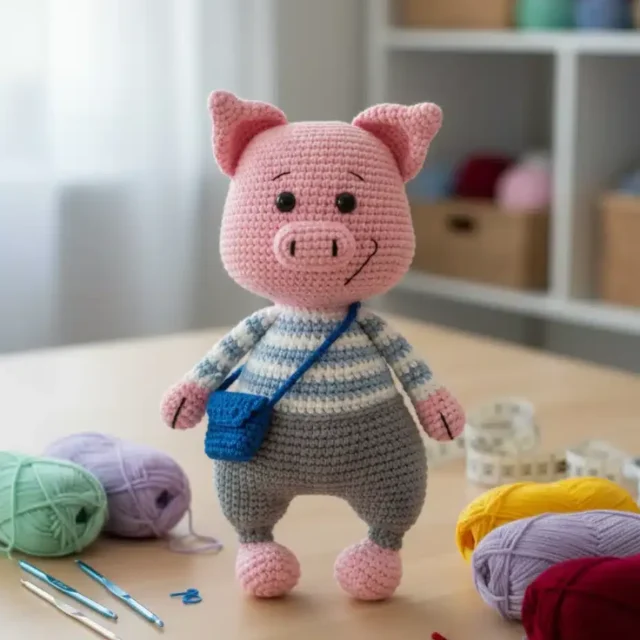
Single Crochet Pig Amigurumi With Dense, Compact Texture
Tight single crochet on a fine 2.0mm hook builds a dense, sturdy fabric for this small pig amigurumi with safety eyes.
- Skill
- Intermediate
- Time
- 4-6 hours
- Hook
- 2.0 mm
- Yarn
- Fingering
- Rounds
- 11
About this pattern
Worked almost entirely in single crochet on a fine 2.0mm hook, the fabric here closes up tight, leaving barely a gap between stitches. That density is what keeps the stuffing from showing through once the piece is filled and gives the surface a smooth, slightly stiff hand rather than a soft, loose one. The pink yarn used across the head, ears, arms, and nose reads as one continuous, matte surface once the rounds stack up.
The shape builds from a flat chain-11 base into a rounded 32-round head, while the legs and body form one continuous 3-round piece rather than separate parts sewn together afterward. Ears and arms are worked small and dense before being sewn on with their own long tails, so handle each piece firmly but stuff it only enough to hold its curve, not to strain the stitches at the seams.
The swatch in numbers
- Rounds
- 11
- Parts
- 5
- Level
- Intermediate
- Time
- 4-6 hours
- Hook
- 2.0 mm
- Yarn
- Fingering
The yarn and the hook
Crochet Hook
- 2.0mm size
Safety Eyes
- Two 8mm eyes for that perfect expression
Stuffing
- Polyfill or similar stuffing material
Scissors
- For clean cuts and finishing
- Yarn Art Jeans (50g): Colors 01 and 40
- Alize Cotton Gold Tweed (100g): Color 200
- Gazzal (50g): Color 3453
Stitches, spelled out
sc Single crochetDense; inc Increase; dec Decrease; tr Treble/Triple crochetDrape; dc Double crochetDrape; hdc Half double crochetDense; sl-st Slip stitch; ch Chain; FLO Front loop onlyRidge; BLO Back loop onlyRidge; MR Magic ringDense.
Tension and hand-feel
After the arm reaches 15 stitches at round 3, pinch the fabric and check that no stuffing is visible through the stitches.
If gaps show between stitches at that point, drop to a slightly smaller hook until the fabric closes as tightly as the 2.0mm result the pattern is built around.
Head
Insert the safety eyes between rounds 19 and 20, spacing them 12 stitches apart for the perfect expression.
Ears
Make 2These proportions create ears that perfectly complement the head size.
Arms
Make 2The arms maintain their shape through strategic decreases, creating natural-looking limbs that attach seamlessly to the body.
Nose
This technique creates the characteristic pig snout that gives Kenny his adorable appearance.
Work carefully through the increases and decreases to maintain the proper shape.
Legs and Body
How the texture is built
- The head starts from 11 chains rather than a magic ring, giving it a flat foundation edge before the increases carry it upward through all 32 rounds.
- The ears increase steadily to 24 stitches by round 6, then hold that count through round 11, so growth stops and the piece flattens into a cupped disc instead of continuing to dome like a sphere.
- Legs and Body are listed as a single piece across 3 rounds, meaning the join between leg and torso happens through continuous stitching rather than a sewn seam afterward.
Putting the pieces together
If you swap the yarn
| 100% cotton, DK weight | Produces a firmer, less fuzzy stitch definition than the finer yarns listed; size up to roughly a 2.5mm hook to keep the fabric from turning stiff, and expect a slightly larger finished pig than 20cm. |
|---|---|
| Acrylic, sport weight | Gives a lighter, springier drape and an easier color range to match the pink called for; work a touch tighter or drop hook size slightly, since acrylic at this weight opens the stitch more than the original yarns. |
| Wool blend, fingering weight | Adds stretch and a softer hand to the fabric, so pack stuffing a little firmer to keep the shape crisp; stay close to the 2.0mm hook, since fingering weight is closest in scale to what the pattern already uses. |
Colorways
- Rosy Blush Yarn Art Jeans color 01 covers the head, ears, arms, and nose as the main pink; Alize Cotton Gold Tweed color 200 works the Legs and Body for a slightly deeper tone; Gazzal color 3453 stays reserved for optional small accents; Yarn Art Jeans color 40 lines the inner ear.
- Two-Tone Contrast Yarn Art Jeans color 40 becomes the main color for the head and the Legs and Body; Yarn Art Jeans color 01 works the ears and arms as a lighter contrast; Alize Cotton Gold Tweed color 200 is kept to the nose alone; Gazzal color 3453 details the inner ear.
Washing and blocking
Hand wash in cool water; the cotton-blend yarns named in the materials list hold their shape well without much stretch, so wringing is unnecessary.
Reshape ears and the head gently while still damp, pressing them back into their rounded curve before they dry, since the dense single crochet fabric holds whatever shape it dries in.
Air dry flat and away from direct heat, then store the finished pig loosely in a box or bag out of direct sunlight so the cotton-blend color stays even and the ears and arms don't flatten under pressure.
When it does not look right
- The ears come out looking like flat pancakes instead of holding a slight curve.
- Rounds 7 through 11 are meant to hold the stitch count at 24 without further increase; if tension loosens during those rounds, the disc goes flat instead of cupping. Work those rounds a touch tighter and check the stitch count matches 24 before moving on.
- The safety eyes sit crooked or too close together.
- The eyes go in between rounds 19 and 20, spaced 12 stitches apart; count the stitches directly rather than eyeballing the gap, and mark both spots before pushing the posts through.
- The base of the head or body puckers instead of sitting flat.
- The head starts from a flat chain-11 foundation, and uneven stitching into that first row keeps the base from lying flat. Work the first round evenly into each of the 11 chains and check the edge lies flat before starting the increase rounds.
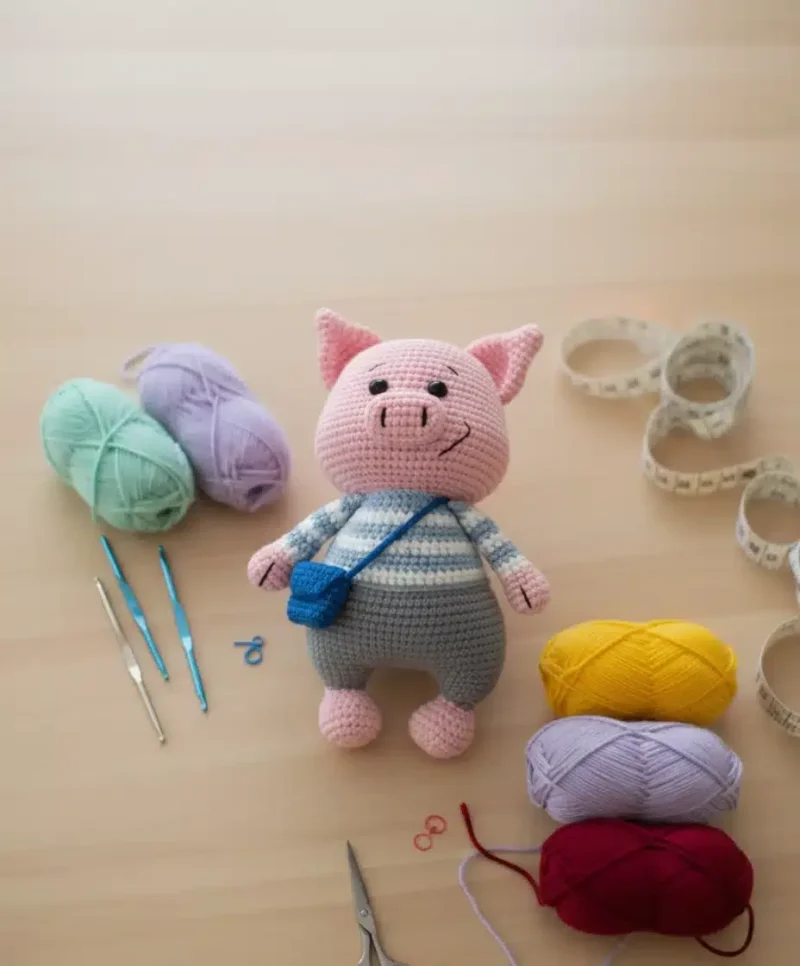
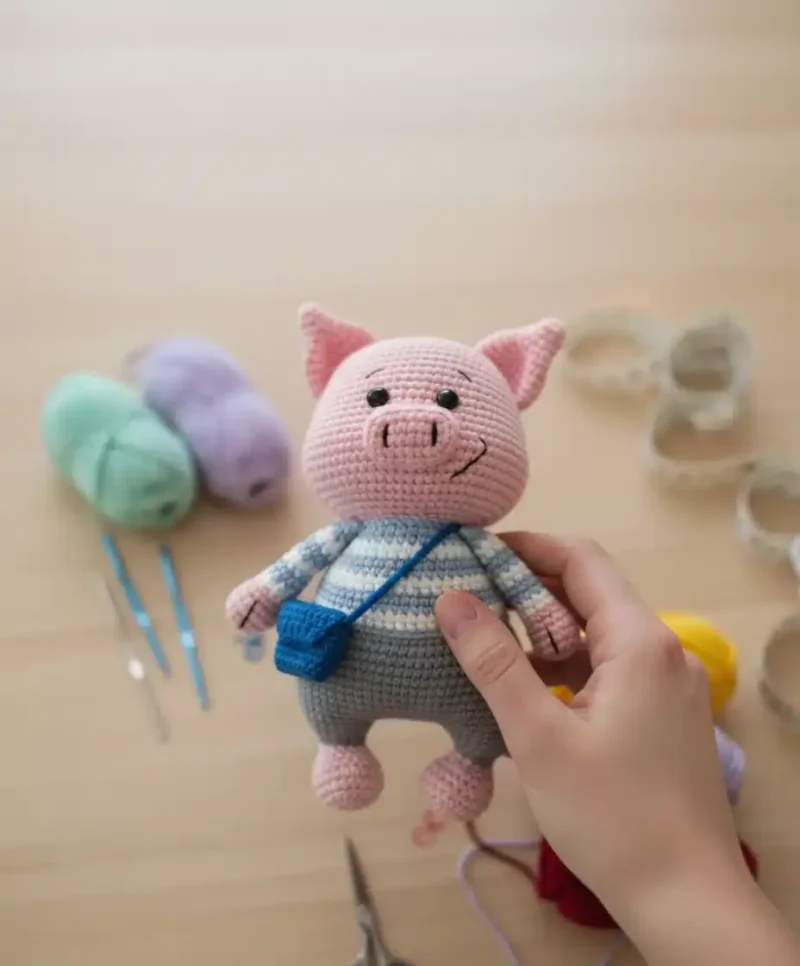
Close-ups
Questions people ask
Why does the head start with a chain instead of a magic ring like the other parts?
The head begins with 11 chains, giving it a flat starting edge to build the wider face upward across 32 rounds. The ears, arms, and Legs and Body pieces all begin with a magic ring instead, which closes into a smooth point at the base.
How do you know exactly where to place the safety eyes?
Insert them between rounds 19 and 20, spacing the two eyes 12 stitches apart across the front of the head. Check the spacing again once some stuffing is in place, since the fabric shifts slightly once it's filled.
Why do the ears stay at 24 stitches for rounds 7 through 11 instead of continuing to increase?
Holding the stitch count flat after the round 6 increase stops the fabric from continuing to dome, giving the ear a rounded, cupped shape rather than a full sphere. That shape sits more naturally against the head once it's sewn on.
Can the legs and body be made as separate pieces instead of one?
They're worked as a single continuous piece across 3 rounds, so the fabric is already joined without a seam at the hip. Splitting them into separate pieces would mean adding a sewn joint, which changes how tight the fabric sits at that point.
New patterns, as they are filed
One short email when a batch lands, with the feel of each.